Why does cutting out candy bars feel harder than quitting coffee?
Sugar affects your brain’s reward system in powerful ways. When you stop eating, your body sends strong signals that something is wrong.
You might wonder if feeling tired, irritable, or foggy-headed means you’re doing something harmful.
Understanding sugar detox symptoms helps you push through the tough first days instead of giving up. Most people don’t realize these effects exist until they experience them firsthand.
If you’re planning to reduce added sugars or have already started and feel terrible, this guide will explain exactly what happens during sugar withdrawal, how long it lasts, and proven ways to feel better faster.
What is a Sugar Detox?
A sugar detox is a structured plan to cut back or eliminate added sugars from your diet. The main goal is to reduce your intake of sweeteners, sugary snacks, and processed foods that spike your blood sugar. It:
- Stabilize blood sugar levels
- Improve energy throughout the day
- Reduce cravings for sweet foods
- Support better overall health
There are two main approaches to sugar detox:
Gradual reduction: You slowly decrease sugar intake over several weeks. This method causes fewer side effects and feels more manageable for most people.
Cold turkey: You stop eating all added sugars at once. This approach works faster but often leads to stronger withdrawal effects.
Once you understand what a sugar detox is, it’s helpful to know what to expect. Your body may react in specific ways as it adjusts to lower sugar intake.
Common Sugar Detox Symptoms
When you reduce or eliminate sugar, your body reacts in noticeable ways; these common symptoms are a normal part of the detox process.
1. Physical Symptoms
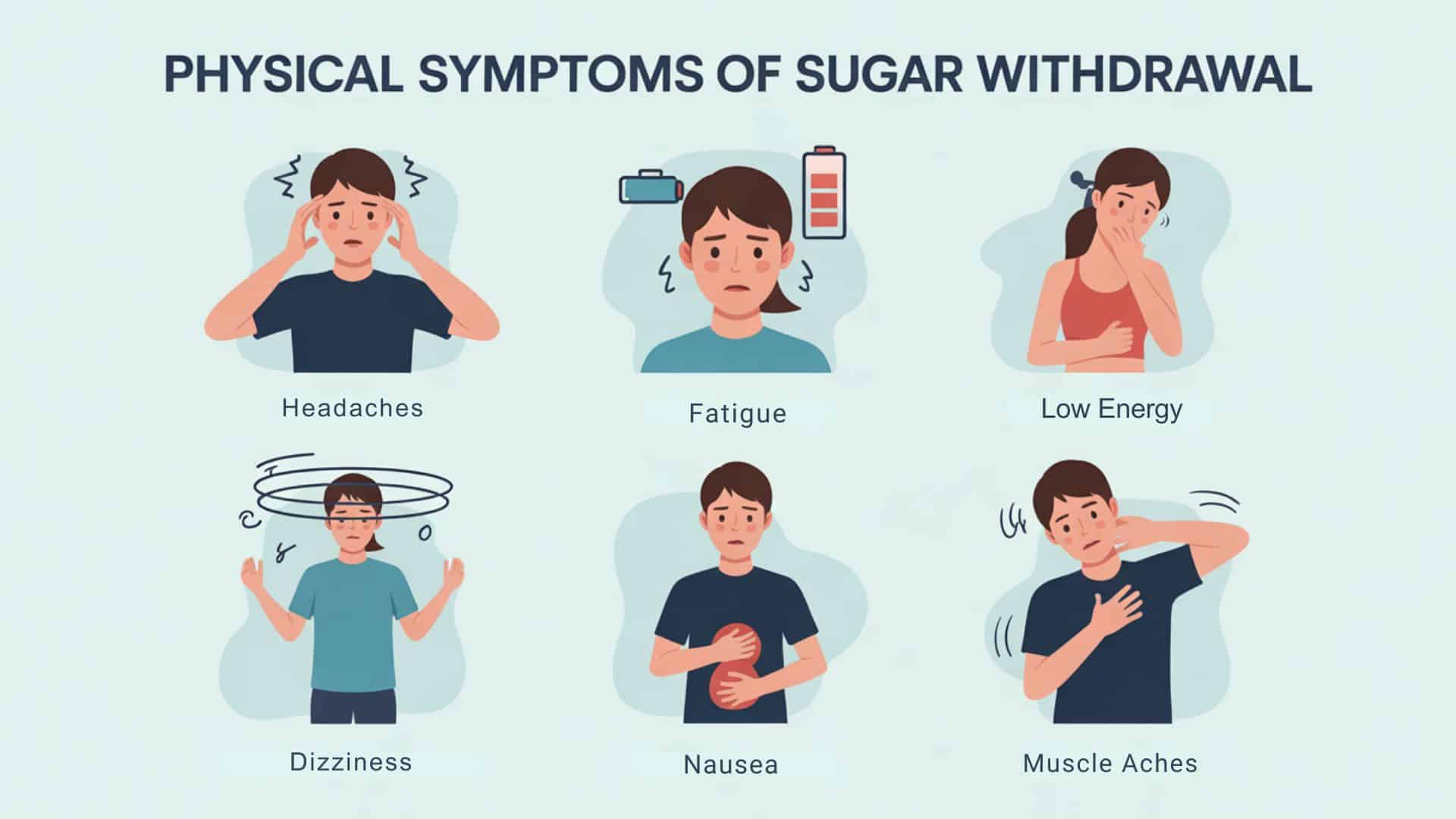
Your body shows clear signs when you stop eating sugar regularly.
Headaches
One of the most common complaints. They usually start within the first 24 hours and feel like tension headaches. Staying hydrated helps reduce their intensity.
Fatigue or low energy
You might feel tired even after a full night’s sleep. Your body needs time to adjust to using fat and protein for energy instead of quick sugar hits.
Dizziness or light-headedness
Blood sugar drops can make you feel unsteady, especially when standing up quickly. This usually passes after a few days.
Nausea or upset stomach
Some people feel queasy or lose their appetite. Eating small, frequent meals with protein helps settle your stomach.
Muscle aches
Your muscles might feel sore or weak, similar to flu symptoms. This happens as your body shifts its energy production process.
2. Mental & Cognitive Symptoms
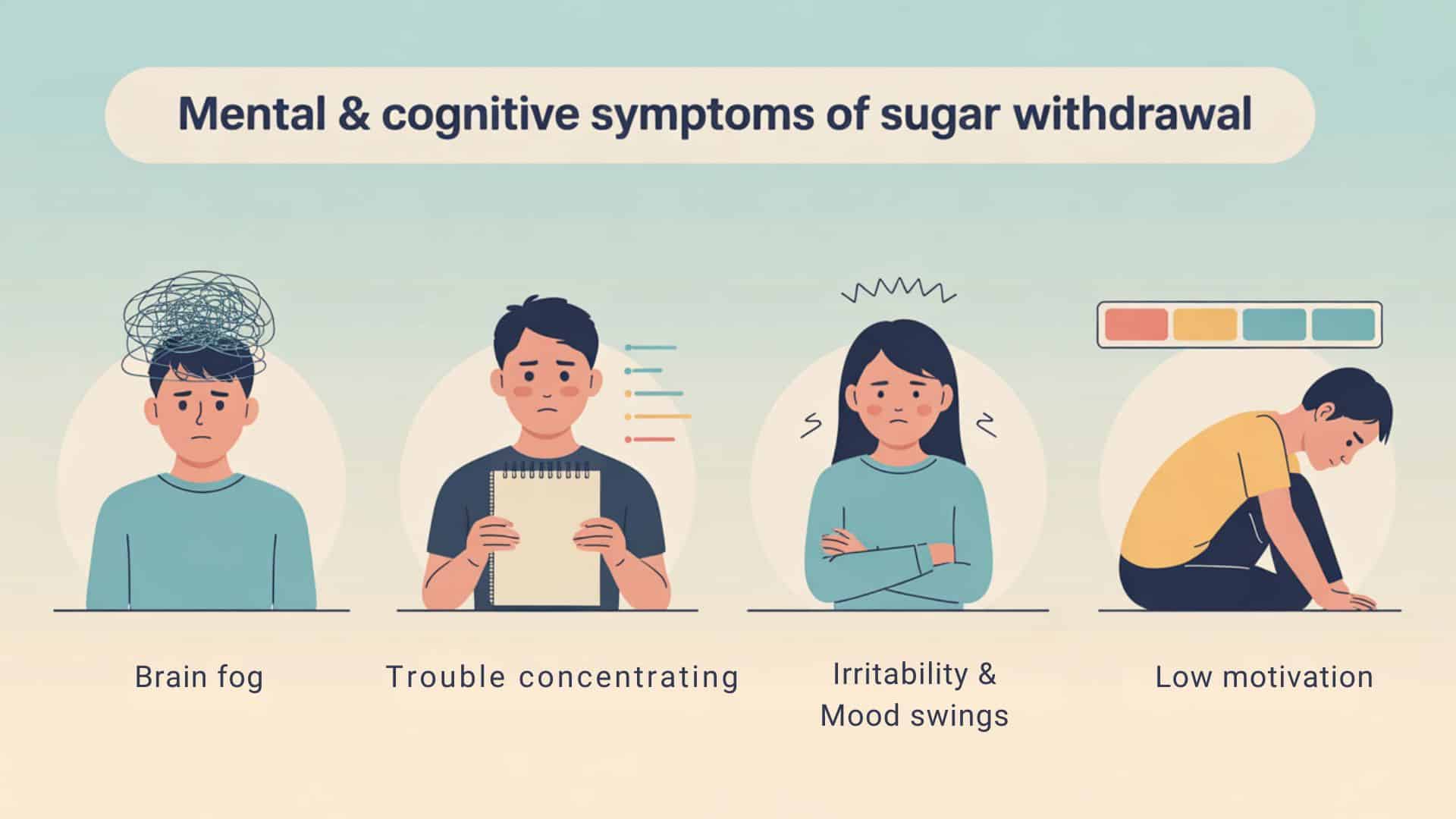
Your brain relies heavily on glucose. When you cut sugar, mental changes often follow.
Brain fog
Thinking feels slower or cloudier than usual. You might forget words mid-sentence or lose your train of thought.
Trouble concentrating
Tasks that normally feel easy require extra effort. Reading or following conversations becomes harder.
Irritability or mood swings
Small annoyances feel bigger. You might snap at people or feel frustrated more easily than normal.
Low motivation
Starting tasks or staying productive feels like pushing through mud. This is temporary but very real.
3. Emotional & Behavioral Symptoms
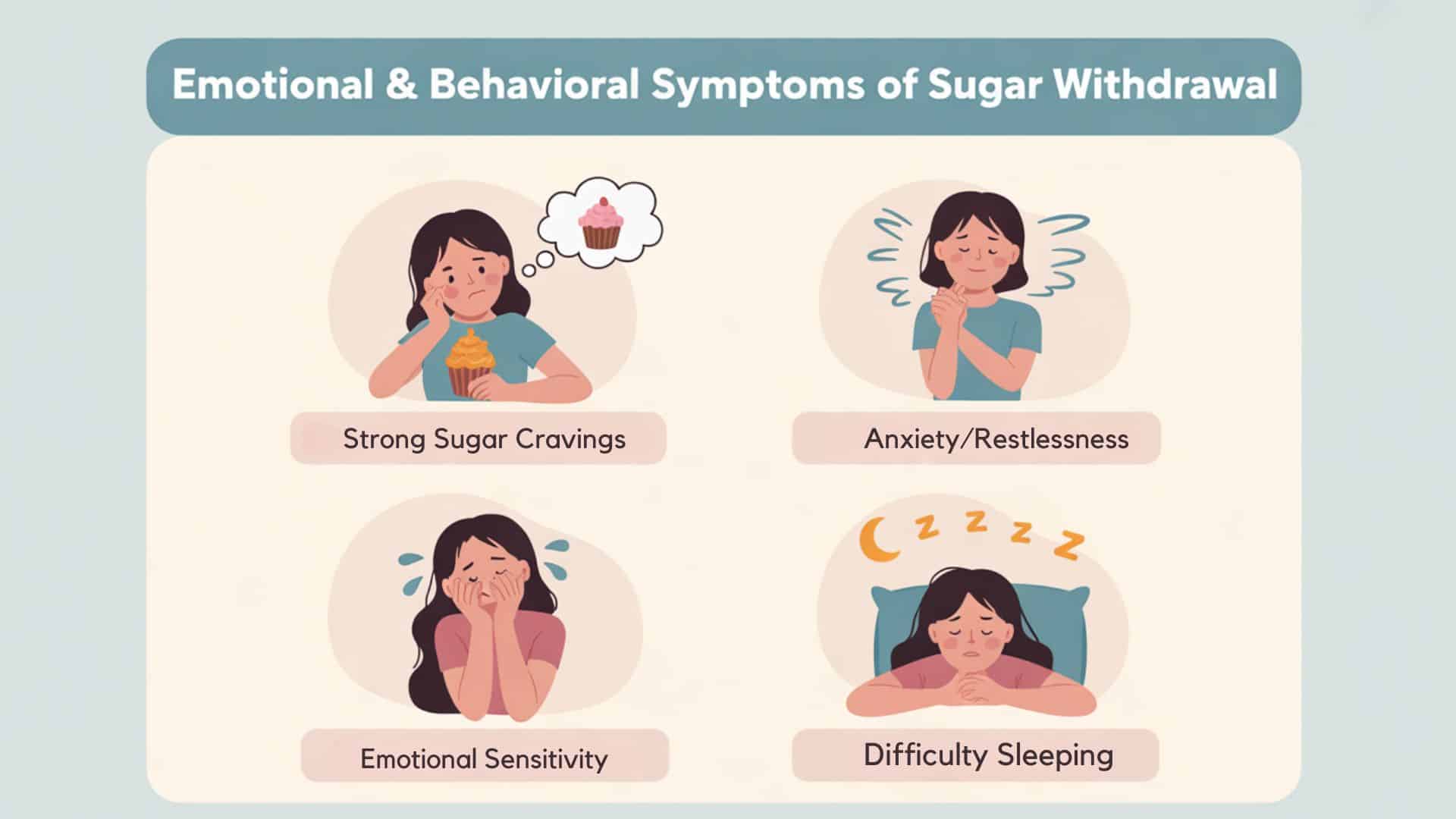
Sugar affects your mood and behavior patterns more than most people realize.
Strong sugar cravings
The most intense symptom for many people. You might constantly think about sweets, especially foods you used to eat daily.
Anxiety or restlessness
A jittery, uncomfortable feeling can appear. You might feel on edge without knowing why.
Emotional sensitivity
Small things might make you want to cry or feel overwhelmed. Your emotional regulation takes a temporary hit.
Difficulty sleeping
Falling asleep or staying asleep becomes harder. Your body’s internal rhythms are adjusting to new fuel patterns.
Knowing the symptoms is one thing, but to make sense of them, it helps to know why they happen in the first place.
Why Do Sugar Detox Symptoms Happen?
Understanding the “why” behind sugar detox symptoms helps you stick with the process.
Blood sugar fluctuations: Your body expects a steady supply of sugar. When you stop, blood glucose levels drop and rise differently. Your pancreas and liver need time to adjust their insulin and glucose production.
Reward system disruption: Sugar triggers dopamine release in your brain. When you stop eating sugar, dopamine levels temporarily drop. This explains the low mood and intense cravings.
Habit pathway changes: Your brain has built strong neural pathways connecting certain times or feelings with sugar intake. Breaking these connections causes mental discomfort as your brain searches for familiar patterns.
Gut-brain axis adjustment: The bacteria in your gut feed on sugar. When you cut it out, the balance of bacteria shifts. These microbes send signals to your brain that can affect mood and cravings while they adapt.
Now that you know why these symptoms occur, let’s look at how they typically grow over time during a sugar detox.
Sugar Detox Symptoms Timeline
Sugar detox symptoms don’t all hit at once; they typically follow a predictable timeline as your body adjusts.
| Timeframe | What Happens | How It Feels | What Helps |
|---|---|---|---|
| Days 1 to 3: Shock Phase | Headaches, strong cravings, fatigue, irritability | Like needing coffee but not getting it | Drink water, eat protein, and sleep early |
| Days 4 to 7: Peak Withdrawal | Mood swings, energy fluctuations, sleep disruption, brain fog, sugar thoughts | Symptoms feel strongest | Plan easy meals, and avoid stress |
| Week 2: Stabilization Starts | Cravings & mood swings decrease, energy stabilizes, physical symptoms fade | Good hours mixed with challenges | Notice improvements, let the body adjust |
| Weeks 3 to 4: Most Symptoms Fade | Cravings are rare, steady energy, taste buds reset, mental clarity improves, and sleep normalizes | Sugar stops feeling necessary | Notice benefits like focus, fewer energy crashes |
| Long-Term (1 to 3 Months) | Occasional cravings in triggers, stable mood/energy, sweet foods taste too sweet, calmer relationship with food | Sugar stops controlling choices | Maintain awareness, enjoy moderation |
With a sense of the symptom timeline, the next question is: how long can you expect these sugar detox symptoms to last?
How Long Do Sugar Detox Symptoms Last?
Most symptoms resolve within 2 weeks. However, several factors affect your personal timeline:
- Prior sugar intake: More sugar → stronger, longer-lasting symptoms
- How abruptly you quit: Cold turkey → intense, fast-peaking symptoms; gradual → milder but longer-lasting
- Overall diet: Balanced diet → shorter symptoms; poor nutrition → longer
- Stress levels: High stress → longer, more difficult symptoms
- Hydration: Dehydration → worsens headaches, fatigue, overall discomfort; proper water → faster recovery
- Sleep quality: Poor sleep → prolonged withdrawal effects
The length of sugar withdrawal can vary depending on how much sugar you typically consume. Here’s a general guideline by intake level:
| Sugar Intake Level | Typical Withdrawal Duration |
|---|---|
| Low (occasional treats) | 3 to 5 days |
| Moderate (daily dessert or drinks) | 7 to 10 days |
| High (multiple sugar sources daily) | 10 to 14 days |
| Very High (sugar with every meal/snack) | Up to 3 weeks |
Knowing how long symptoms last is helpful, but practical strategies can make the process much easier.
Tips to Reduce or Manage Sugar Detox Symptoms

While sugar detox can be challenging, there are practical strategies to ease symptoms and support your body through the process.
- Eat balanced meals: Include protein, fiber, and healthy fats at every meal to keep energy steady and reduce cravings. Examples: chicken, eggs, beans, vegetables, whole grains, avocado, nuts.
- Stay hydrated: Drink 8 to 10 glasses of water daily to prevent fatigue and headaches. Add lemon or cucumber for variety.
- Reduce sugar gradually if needed: Cut sugary drinks first, then desserts, then hidden sugars, adjusting over a few weeks to make withdrawal manageable.
- Get enough sleep: Aim for 7 to 9 hours nightly to balance hunger and stress hormones, which helps curb sugar cravings.
- Exercise moderately: Light to moderate activity like walking, yoga, or cycling boosts mood, energy, and insulin sensitivity without overtaxing your body during the first week.
- Manage stress: Use breathing exercises, meditation, gentle stretching, or time in nature to prevent stress-induced sugar cravings.
- Avoid artificial sweeteners: They can prolong cravings. Opt for fresh fruit, small amounts of honey, or dates for sweetness.
- Track symptoms and progress: Note daily feelings, symptom changes, and non-scale victories, such as better sleep or clearer skin, to stay motivated.
While there are helpful strategies to ease your sugar detox, it’s equally important to know what to avoid to prevent setbacks.
What NOT to Do During a Sugar Detox
Just as important as what you should do during a sugar detox is knowing what to avoid to prevent setbacks and unnecessary discomfort.
| Rule | Why It Matters / What to Do |
|---|---|
| Don’t skip meals | Skipping meals can drop blood sugar levels, leading to headaches, irritability, cravings, and fatigue. Eat every 3–4 hours. |
| Don’t overuse artificial sweeteners | They keep your preference for sweet tastes. Focus on resetting your palate, not finding substitutes. |
| Don’t diet too aggressively | Avoid strict calorie counting or restricting food groups. Focus on removing added sugar. Eat when hungry and include all macronutrients. |
| Don’t ignore severe symptoms | Seek medical attention for extreme dizziness, persistent vomiting, worsening symptoms after 2 weeks, or concerning blood sugar readings. |
| Avoid “all-or-nothing” mindset | One slip doesn’t ruin progress. Acknowledge it, learn from it, and continue with your plan. |
Once the challenging phase passes, your body begins to adjust, and the benefits of a sugar detox start to become noticeable.
Benefits After Sugar Detox: Symptoms Fade
After the toughest days pass, your body starts to reap the benefits of a sugar detox, and most symptoms gradually fade.
- Energy stability: No more afternoon crashes or morning sluggishness. Your energy stays consistent because blood sugar remains stable.
- Reduced cravings: Sweet foods lose their power over you. You can walk past desserts without internal struggle.
- Mental clarity: Brain fog lifts. Thinking, focusing, and remembering become easier. Work productivity often improves noticeably.
- Better mood regulation: Emotional ups and downs smooth out. You feel calmer and more balanced throughout the day.
- Reduced bloating & inflammation: Many people notice less puffiness, especially in their face and stomach. Sugar drives inflammation in the body.
- Taste buds reset: Foods taste different after a few weeks. Natural foods taste sweeter. Previously, favorite treats tasted overwhelmingly sugary.
By understanding the process and sticking with it, a sugar detox can reset your cravings, boost your energy, and help you build a healthier relationship with food.
Conclusion
Sugar detox symptoms are challenging but temporary. Headaches, cravings, fatigue, and mood changes typically last between 3 days to 2 weeks.
Your body simply needs time to adjust to functioning without constant sugar intake. The discomfort you feel now leads to significant benefits later: stable energy, reduced cravings, mental clarity, and better overall health.
Use the strategies in this guide: eat balanced meals, stay hydrated, sleep well, and be patient with yourself. Track your progress to stay motivated.
Remember that gradual reduction often works better than quitting cold turkey if symptoms feel overwhelming. The effort you put in today pays off with lasting improvements.