Struggling with back pain and feeling unsure about how to prepare your body for labor?
Many expectant parents across the United States are finding relief through yoga ball pregnancy exercises that support comfort and build strength during this transformative time.
These simple movements offer practical benefits backed by medical research and recommended by healthcare providers.
Learning proper techniques helps ease common discomforts such as pelvic pressure and lower back tension while strengthening the muscles needed for childbirth. Yoga ball pregnancy exercises provide safe options for staying active throughout each trimester.
Your body changes constantly during pregnancy, and having practical tools makes the experience more manageable and helps you feel physically ready for delivery day with confidence and peace of mind.
What Is a Pregnancy Yoga Ball?
A pregnancy ball is a specialized exercise ball designed for use during pregnancy. Unlike regular exercise balls, pregnancy balls are built to support the added weight and physical changes during pregnancy.
These balls are typically larger and made from high-quality, durable materials to withstand more pressure and movement. Most pregnancy balls range from 55 cm to 75 cm in diameter, depending on your height and body proportions.
The terms birthing ball, yoga ball, and stability ball all refer to the same product. Healthcare providers and fitness experts recommend these tools for prenatal exercise and labor support.
The anti-burst feature ensures safety, while the non-slip surface provides stability during use. These balls are constructed from thick, anti-burst PVC material that can support weights of 500 pounds or more, making them safe for use during pregnancy.
You’ll find pregnancy balls available at most fitness retailers, big-box stores, and online platforms. The investment is minimal, typically ranging from $15 to $40, yet the benefits span your entire pregnancy and beyond.
Benefits of Using a Yoga Ball During Pregnancy
Research shows that yoga ball pregnancy exercises offer significant benefits throughout pregnancy, labor, and recovery.
Medical studies and healthcare professionals have documented numerous advantages that make these simple tools valuable for expectant mothers.
1. Relief from common pregnancy discomforts stands out as one of the primary benefits. Lower back pain and pelvic pressure decrease when sitting on a pregnancy ball instead of a regular chair.
2. Improved posture and spinal alignment help your body adapt to physical changes as your baby grows. The dynamic sitting position naturally engages core muscles, promoting better circulation and reducing swelling in the legs and feet.
3. Core, pelvic floor, and lower-body strength maintenance proves helpful for labor and postpartum recovery. The ball encourages optimal pelvic alignment, helping your pelvic floor muscles work more effectively.
4. Enhanced pelvic mobility can help position the baby head-down as labor approaches. Studies indicate that using a birthing ball during labor with an epidural significantly decreases the length of labor and reduces the chances of needing a cesarean section.
5. Better circulation and reduced swelling result from active sitting compared to prolonged static positions. One study showed that birthing ball exercises during mid to late pregnancy reduced pain and fatigue in the waist.
These tools complement other healthy pregnancy practices, offering a safe, accessible way to stay active and comfortable throughout your pregnancy.
Simple Yoga Ball Exercises for Pregnancy
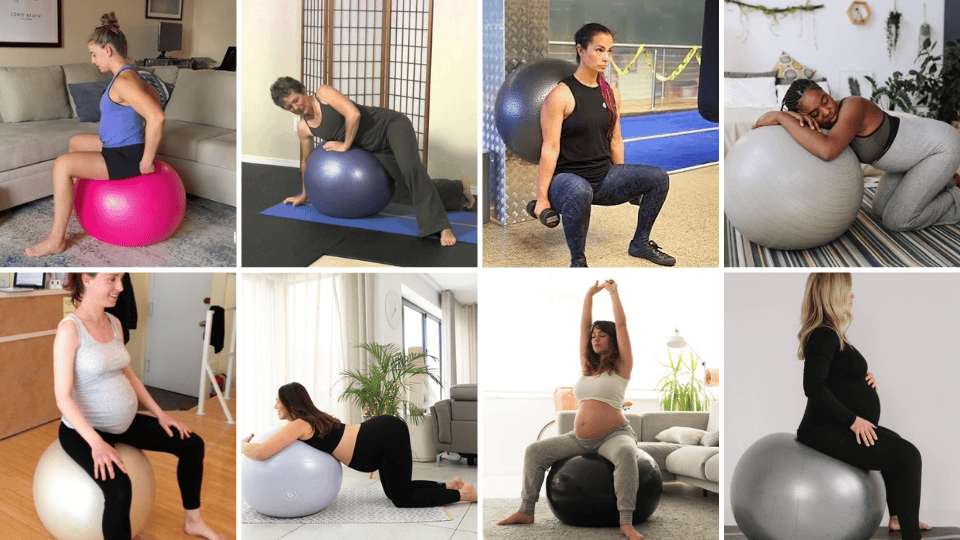
Yoga ball pregnancy exercises keep you active, relieve discomfort, and prepare your body for labor. Below are safe exercises broken down by trimester with modifications for each stage.
Always listen to your body and consult your healthcare provider before starting any new exercise routine.
First Trimester
Your body adjusts to pregnancy during the first trimester. Focus on gentle exercises that ease discomfort and support early body changes. Exercises should be low-impact and focused on improving flexibility and stability.
1. Seated Rocking: Sit on the ball with feet flat on the floor. Gently rock back and forth to relieve early-stage back tension and encourage pelvic mobility. This simple movement helps your body adjust to pregnancy changes.
2. Pelvic Tilts: While seated on the ball, gently tilt your pelvis forward and backward. This alleviates early back pain and engages the pelvic floor. Keep movements slow and controlled.
3. Hip Circles: Sit on the ball and rotate your hips in slow, circular motions clockwise and counterclockwise. This improves pelvic flexibility and relieves discomfort in the hips and lower back. Perform 5-10 circles in each direction.
4. Seated Marching: Lift one foot off the ground at a time while seated. This engages the core and improves balance with minimal strain on the body. Alternate legs for 10-15 repetitions.
Second Trimester
Many women experience increased energy and comfort during the second trimester. This is an excellent time to focus on strengthening the core and improving posture. You can add more dynamic movements to your routine.
5. Side Leg Lifts: While seated, lift one leg at a time out to the side. This strengthens the outer thighs and hips, helping with leg strength and stability. Perform 10-12 lifts per side.
6. Wall Squats: Place the ball between your lower back and the wall, then squat slowly. This strengthens the legs and helps improve posture, supporting the growing belly. Keep knees aligned with toes.
7. Seated Bouncing: Sit on the ball with knees at a 90-degree angle and gently bounce up and down. This relieves pressure on the pelvic area and increases circulation. Bounce gently for 1-2 minutes.
8. Kneeling and Leaning: Kneel on a soft surface and lean forward, resting your arms on the ball. This opens the pelvis and relieves pressure on the lower back during the second trimester as the uterus expands.
Third Trimester
Your body prepares for labor during the third trimester. Focus on exercises that open the pelvis, relieve pressure, and prepare your body for the demands of childbirth. These exercises are more labor-specific and aim to increase pelvic flexibility.
9. Supported Squats: With the ball placed against a wall, squat while supporting your back on the ball. This prepares your pelvis for childbirth and strengthens leg muscles important for labor positions.
10. Gentle Pelvic Rocking: While sitting on the ball, slowly rock your hips forward and back. This eases lower back pain and opens the pelvis in the third trimester as your body gets ready for labor.
11. Forward Lean Stretch: Sit on the ball and lean forward with your feet on the floor. This stretches your back and hips, relieving tension and promoting pelvic flexibility in the final stages of pregnancy.
Labor and Postpartum Use of Yoga Ball
Yoga ball pregnancy exercises extend beyond prenatal fitness into labor and postpartum recovery. These techniques support your body through delivery and help rebuild strength afterward.
Labor-Specific Uses for the Birthing Ball
During labor, the birthing ball becomes a valuable comfort tool that supports your body through contractions and delivery.
Sitting on the ball during contractions helps alleviate discomfort and promotes an upright position that encourages the baby to descend. Bouncing gently, leaning forward, or performing hip circles can provide relief during early labor and help manage pain naturally.
Many birthing centers and hospitals offer balls to laboring mothers, recognizing their effectiveness in supporting natural birth.
Postpartum Recovery Exercises
After delivery, yoga ball pregnancy exercises help your body recover and rebuild strength while supporting core rebuilding and pelvic floor strengthening.
Gentle pelvic tilts and core engagement while seated on the ball slowly re-engage abdominal muscles without strain. Supporting squats using the ball helps maintain pelvic floor integrity, while gentle stretches support spine alignment and reverse postural changes from pregnancy.
Wait for your healthcare provider’s approval before starting postpartum exercises, and begin with short sessions that gradually increase in duration.
These exercises bridge the gap between pregnancy preparation and postpartum recovery. Use them as tools to support your body through each stage of motherhood.
Safety Measures for Using a Pregnancy Ball
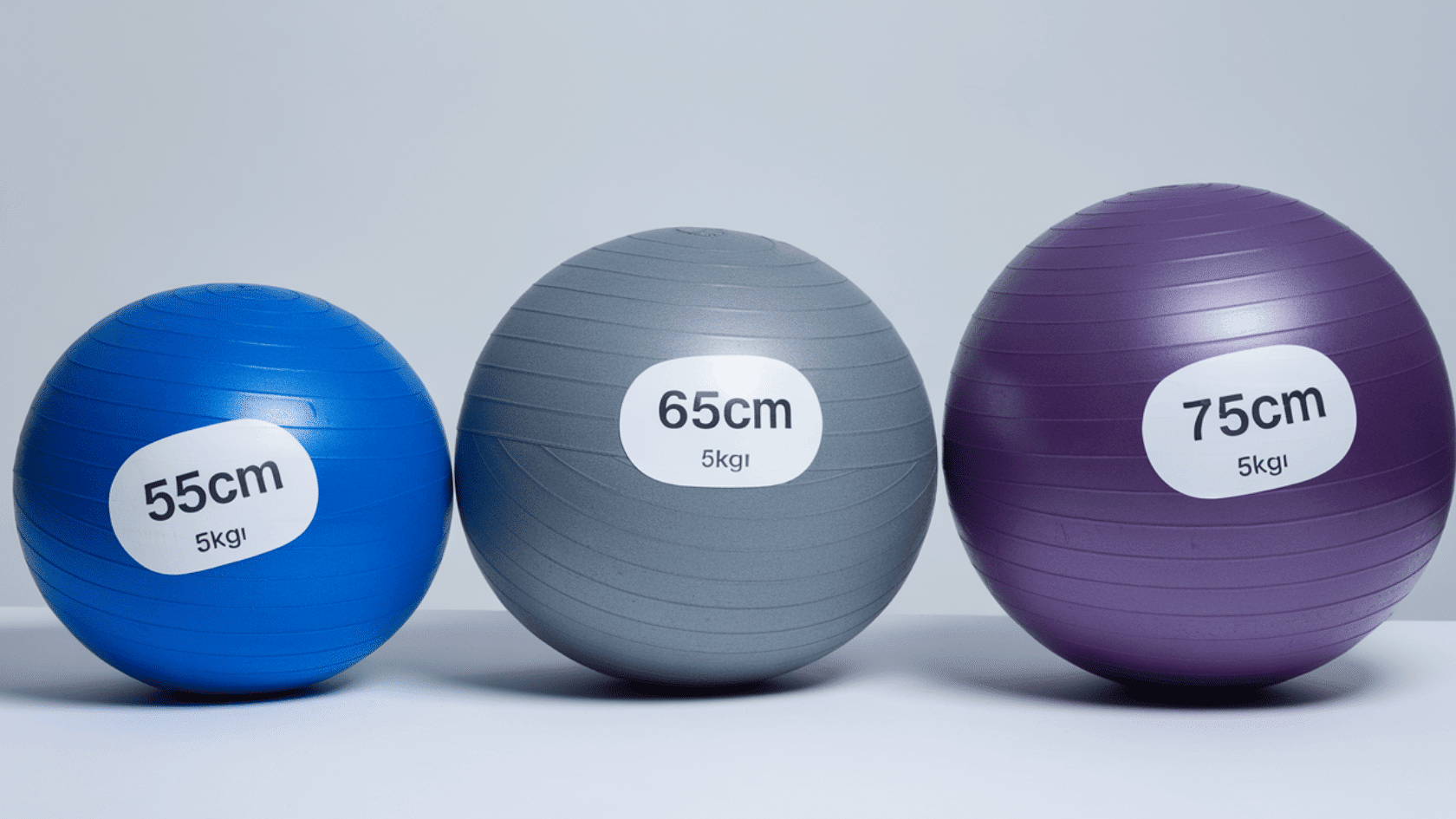
Choosing the right ball ensures comfort and stability during yoga ball exercises during pregnancy. Select a ball based on your height to ensure proper posture and mobility.
When sitting, your knees and hips should be even at around 90 degrees, or your knees should be slightly lower than your hips at around 95 degrees. Your feet should rest flat on the floor for stability.
|
Yoga Ball Size according to Height 1. 55 cm ball: Best for individuals under 5’4″ in height. 2. 65 cm ball: Suitable for individuals between 5’4″ to 5’10” in height. 3. 75 cm ball: Recommended for individuals over 5’10” in height. |
Using the ball safely requires starting with gentle movements and avoiding any discomfort. Always use the ball on a stable surface and make sure the area is free from obstructions. Look for anti-burst balls that can support over 500 pounds for pregnancy use.
Check with your healthcare provider before starting any new exercise during pregnancy to ensure the exercises are safe for your specific situation and any pregnancy-related conditions.
Common Mistakes to Avoid with Yoga Ball Pregnancy
Using yoga ball pregnancy exercises safely requires awareness of common mistakes that can reduce effectiveness or create risks. Understanding these pitfalls helps you maximize benefits while protecting yourself and your baby.
1. Using the wrong ball size creates instability or discomfort and can strain joints. Measure your height and choose the appropriate size for optimal support and proper positioning.
2. Overdoing exercises with too frequent or too intense movements may cause discomfort or strain. Listen to your body, stop if you feel pain, and rest between exercise sessions while staying hydrated.
3. Using the ball on slippery surfaces or without a stable footing creates safety hazards. Place a yoga mat underneath for added grip and ensure adequate space around you to prevent falls.
4. Skip exercises or ball use if you have pregnancy complications like placenta previa, high blood pressure, or preterm labor. Always check with your healthcare provider first before starting any exercise routine.
5. Treating the ball as a substitute for comprehensive prenatal care rather than a complement. Proper nutrition, rest, medical care, and other prenatal exercises work together for optimal pregnancy health.
Combine ball exercises with regular prenatal checkups, balanced nutrition, adequate rest, and other recommended activities for the best pregnancy outcomes.
Final Thoughts
Yoga ball pregnancy exercises offer a practical way to ease discomfort, strengthen the body, and prepare for labor.
These movements provide relief from common pregnancy ailments while building the physical capacity needed for childbirth.
Research suggests that regular practice can reduce labor duration and improve your birth experience. Use this guide consistently but safely, adapting as your body changes throughout each trimester.
Remember that every pregnancy is unique, so modifications may be necessary. Consult your prenatal care provider before starting any exercise routine for personalized recommendations based on your health status.
Want a more comfortable pregnancy and smoother labor? Start today and share this guide with other expectant parents.