Every morning, millions of Americans pour from a carton labeled “1%,” yet few understand what that number actually means.
The “1%” refers to milkfat as a percentage of the total liquid weight, not the percentage of calories from fat.
Despite its reduced fat content, 1% lowfat milk retains all 13 essential nutrients found in whole milk.
This guide covers everything you need: verified nutrition data from the USDA, side-by-side brand comparisons, available packaging sizes, and lactose-free alternatives, to make a confident, informed choice at the dairy aisle.
What Does 1% Lowfat Milk Actually Mean?
To produce 1% milk, fat is first separated from whole milk, then added back until milkfat reaches exactly 1% of the liquid’s total weight.
This is the same process used for 2% and skim milk. The U.S. Dairy industry classifies four standard types:
- Whole milk at 3.25% milkfat
- Reduced-fat milk at 2% milkfat
- Low-fat milk at 1% milkfat
- Fat-free/Skim milk at 0% milkfat
All four types share the same 13 essential nutrients per serving, including calcium, potassium, phosphorus, riboflavin, and vitamins A, B12, and D.
The only meaningful differences lie in fat content, calorie count, and taste profile.
1% Milk Nutrition Facts (Per 1 Cup / 8 oz)
The following data is sourced from the USDA FoodData Central:
| Nutrient | Amount | % Daily Value |
|---|---|---|
| Calories | 100 | |
| Total Fat | 2.5g | 3% |
| Saturated Fat | 1.5g | 8% |
| Protein | 8g | 16% |
| Total Carbohydrates | 12-13g | 5% |
| Natural Sugars (Lactose) | 12g | |
| Calcium | 300-310mg | 25% |
| Vitamin D | 2.5mcg | 15% |
| Potassium | ~400mg | 8% |
| Phosphorus | ~230mg | 20% |
| Riboflavin (B2) | 0.4mg | 30% |
| Vitamin B12 | 1.2-1.3mcg | 50% |
| Vitamin A | 150mcg | 15% |
Why are vitamins A and D added? Because vitamin A is naturally present in milk fat, a portion is lost when fat is removed. Both vitamins are added back to meet USDA standards: a minimum of 2,000 IU of vitamin A and 400 IU of vitamin D per quart.
Standard ingredients on every 1% milk label: Lowfat milk, Vitamin A Palmitate, Vitamin D3. Allergen: Contains Milk.
Top 1% Lowfat Milk Brands Compared
While the core nutrition profile of 1% milk stays consistent across the board, brands differ in sourcing, certifications, and regional availability.
Here is a closer look at the most widely available options.
1. Prairie Farms 1% Lowfat Milk
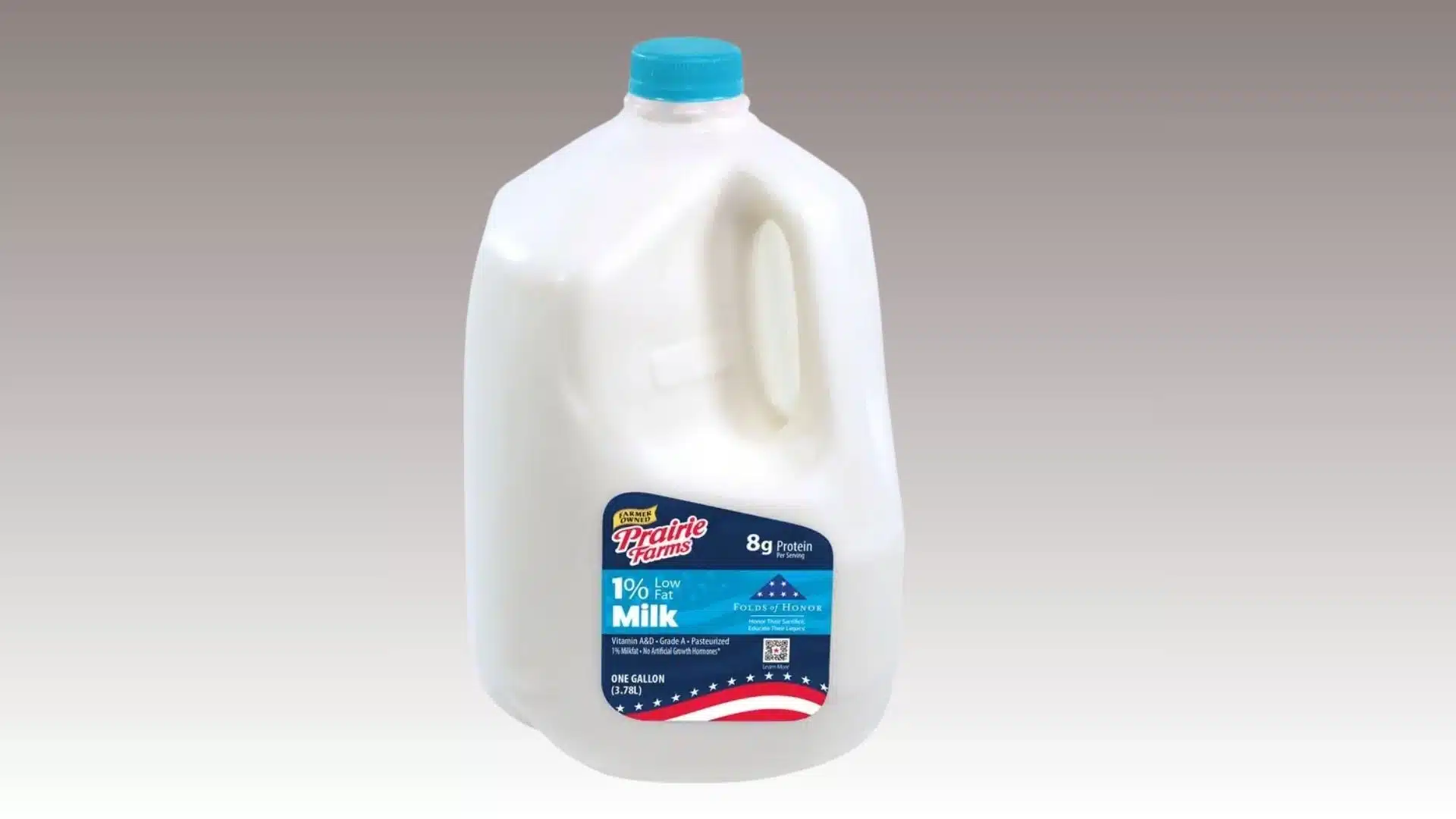
A Midwest staple, Prairie Farms offers pasteurized, Gluten-Free, and Kosher-certified 1% milk in recyclable packaging. It carries no added hormones claim and is widely available across the central U.S.
2. Horizon Organic 1% Lowfat Milk
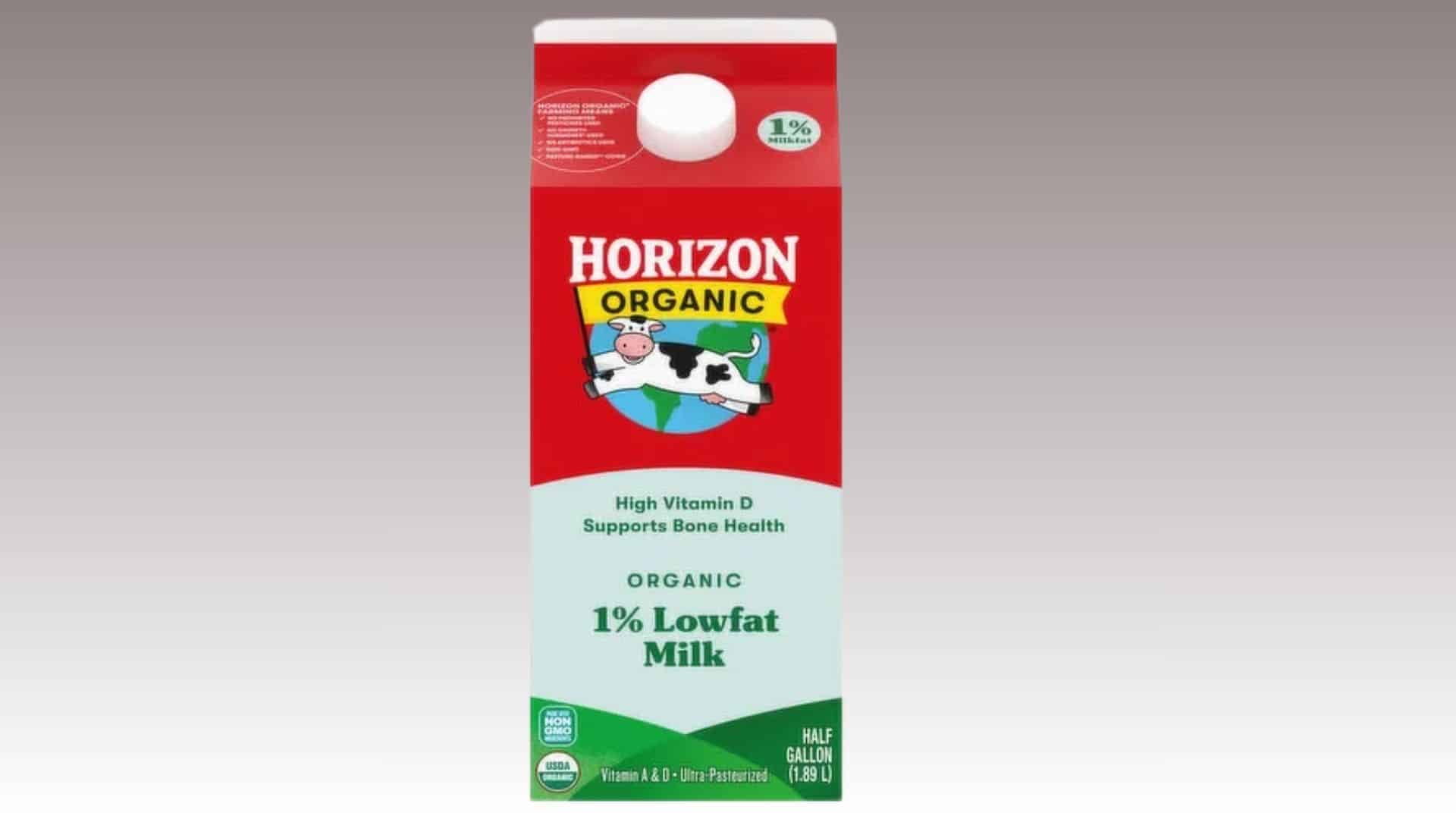
USDA Certified Organic. Sourced from pasture-raised cows that graze outdoors a minimum of 120 days per year on an all-organic, non-GMO diet.
Horizon’s 1% milk contains a notably higher 4.5mcg of Vitamin D per serving (25% DV), compared to the typical 2.5mcg (15% DV) in conventional brands. No antibiotics or added growth hormones are used.
3. Maola 1% Lowfat Milk
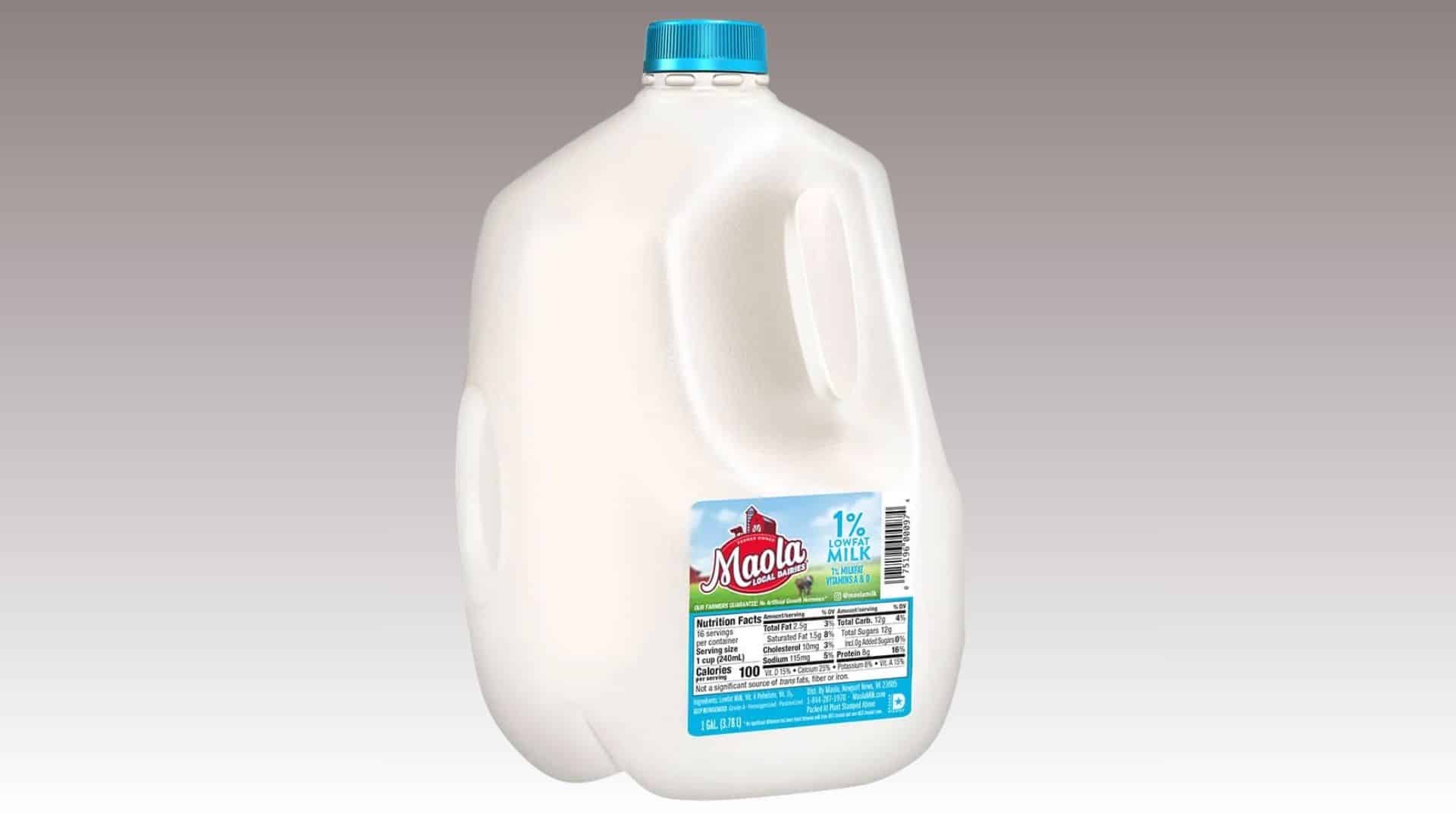
A family-farmer-owned cooperative with roots dating to 1920, Maola delivers regionally focused, farm-to-fridge milk across the Mid-Atlantic U.S. Nutrition meets the USDA standard: 8g protein and 13 essential nutrients per cup.
4. Member’s Mark 1% Lowfat Milk (Sam’s Club)
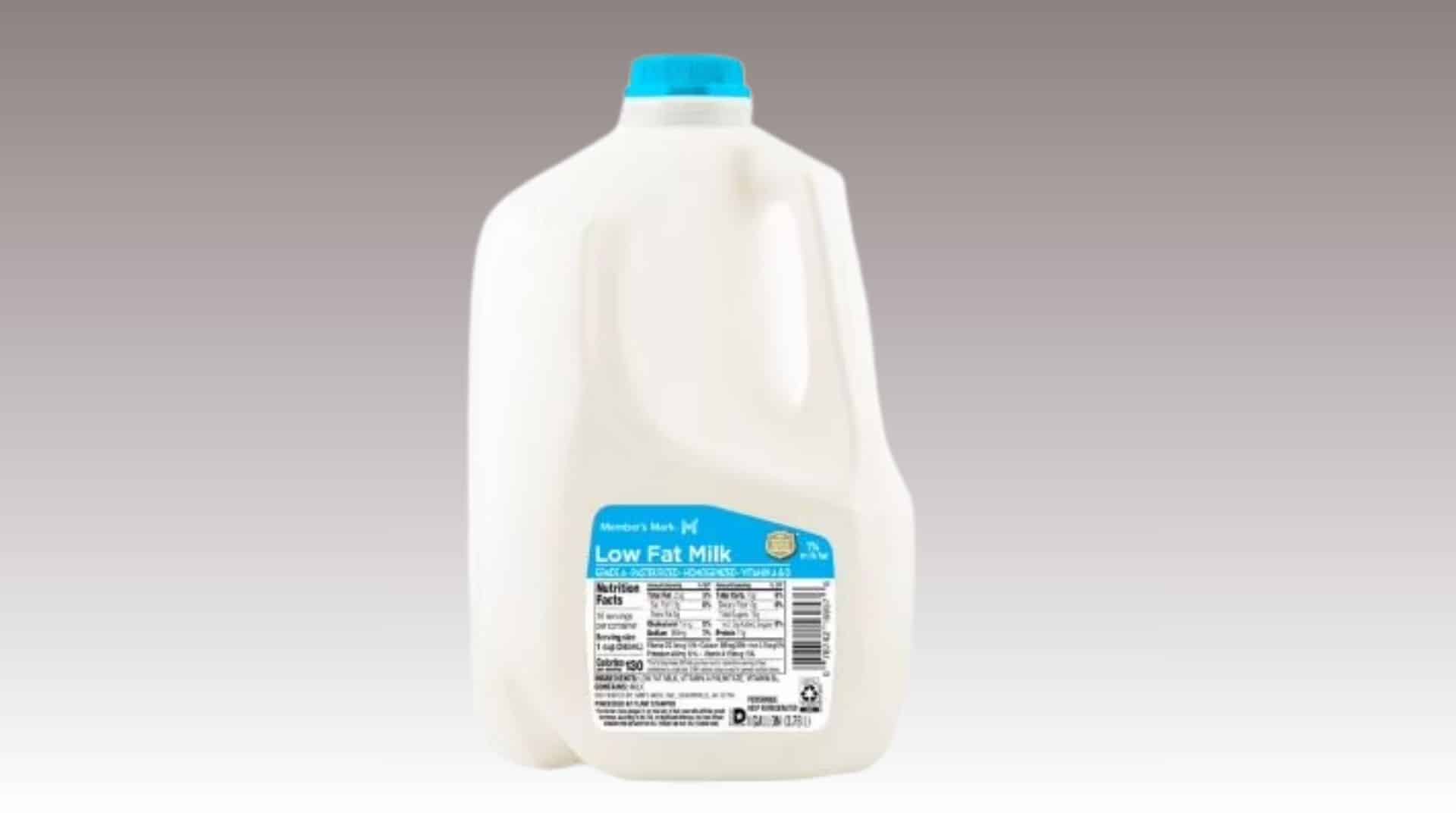
A private-label bulk option with a straightforward two-ingredient label (Low Fat Milk, Vitamin A Palmitate, and Vitamin D3). Ideal for large households seeking everyday value.
Packaging Sizes Available
1% lowfat milk is sold in the following standard formats:
- Half-pint (8 oz) for school cafeterias, single-serve, and travel
- Pint (16 oz) for small households and coffee use
- Quart (32 oz) for moderate weekly use
- Half-gallon (64 oz) is the most common retail size
- Gallon (128 oz) for bulk purchase, available at warehouse clubs
- Shelf-stable UHT cartons with extended shelf life and no refrigeration needed until opened
Quick identification tip: Most brands mark 1% milk with a light blue or green cap or label band. However, this is not a universal industry standard, so always verify the fat percentage printed on the carton.
5. LACTAID Lowfat 1% Lactose-Free Milk
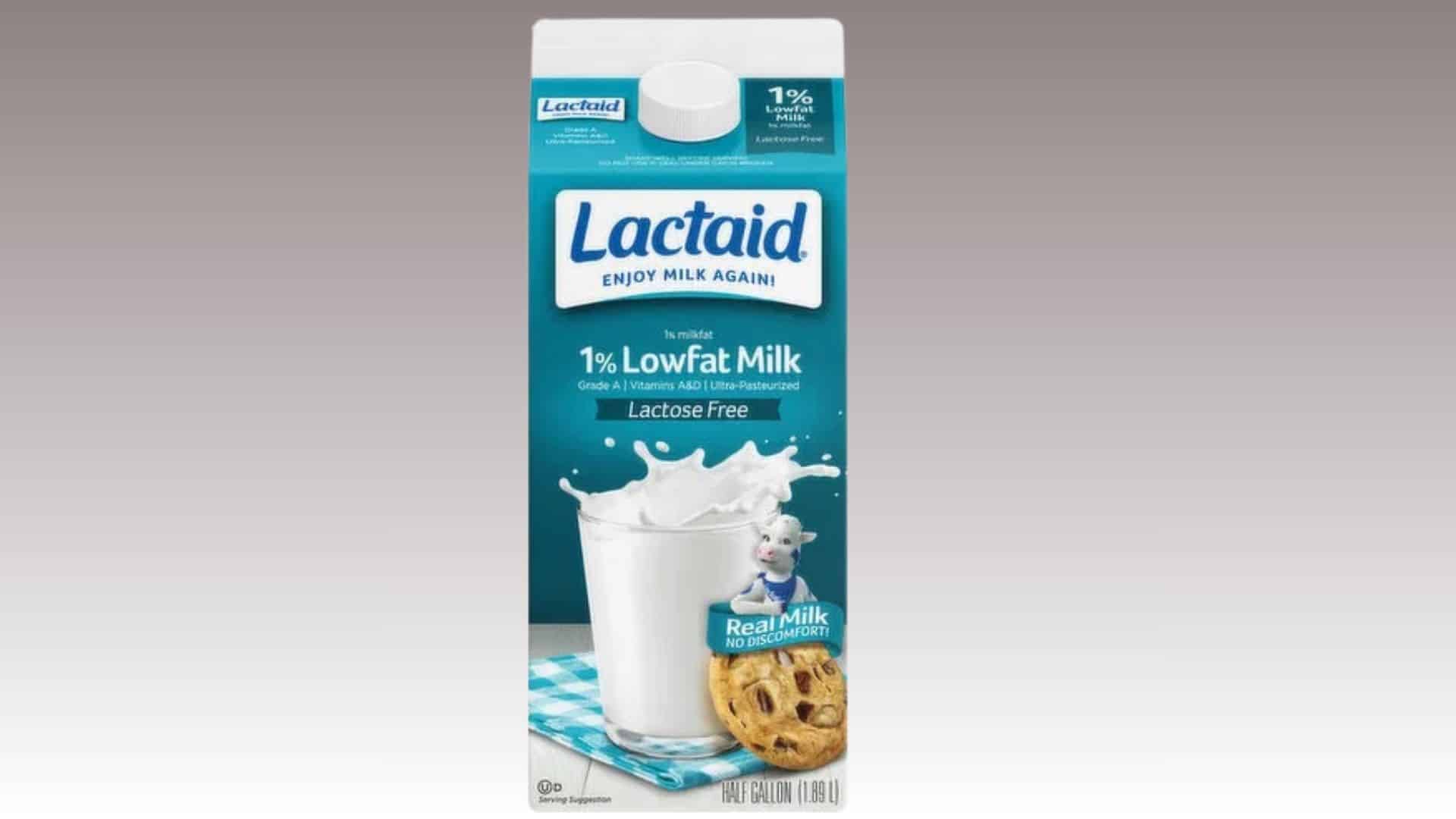
LACTAID is the leading lactose-free dairy brand in the U.S. It uses farm-fresh milk from cows not treated with artificial growth hormones and adds the lactase enzyme during processing.
The nutrition profile matches standard 1% milk exactly: 8g protein, 25% DV calcium, and the full suite of B vitamins, making it a direct swap for those with lactose sensitivity.
Who benefits most:
- Adults with lactose intolerance seeking milk’s bone-health nutrients
- Older adults who need calcium and vitamin D without digestive discomfort
- Athletes using milk for post-workout protein and recovery
1% Milk vs. Other Milk Types: Quick Comparison
All cow’s milk shares the same 13 essential nutrients, but fat content is what sets each type apart. Here is what each variety means before you compare them side by side.
Skim milk is fat-free milk with nearly all fat removed, making it the lowest-calorie option at 80 calories per cup. It retains the same protein and minerals as whole milk but has a thinner, more watery consistency.
1% lowfat milk is milk that contains 1% milkfat by weight, delivering 100 calories per cup with a lighter taste than 2% or whole milk. It sits between skim and reduced-fat, with all 13 essential nutrients intact.
2% reduced-fat milk is milk with 2% milkfat by weight and 120 calories per cup. It offers a creamier texture and richer flavor than 1% milk while still being lower in fat than whole milk.
Whole milk is milk that retains its natural milkfat at 3.25% by weight, making it the richest and most calorie-dense option at 150 calories per cup. It is commonly recommended for children under two years of age.
Here is a quick comparison table:
| Features | Skim | 1% | 2% | Whole |
|---|---|---|---|---|
| Calories (8oz) | 80 | 100 | 120 | 150 |
| Total Fat | 0g | 2.5g | 5g | 8g |
| Saturated Fat | 0g | 1.5g | 3g | 5g |
| Protein | 8g | 8g | 8g | 8g |
| Carbs | ~12g | ~12g | ~12g | ~12g |
Protein and carbohydrate content remain consistent across all four types, with only fat and calories differing.
Conclusion
1% lowfat milk delivers a nutritionally complete, lower-fat option backed by decades of dietary guidance and verified USDA data.
Whether you choose a conventional brand like Prairie Farms, a certified organic option like Horizon, a bulk format from Member’s Mark, or a lactose-free variety like LACTAID, the core nutritional profile stays consistent: 100 calories, 8g protein, and 13 essential nutrients per cup.
Packaging flexibility from single-serve cartons to full gallons makes it practical for any household.
For personalized dairy recommendations, consult a registered dietitian or your healthcare provider.
Frequently Asked Questions
Is 1% Milk Good or Bad for You?
Low-fat milk, such as 1 percent or less fat, is suggested for ages 2 and older.
Is There a Lot of Sugar in 1% Milk?
Whole or lactose-free, it naturally contains about 12 grams of sugar (lactose) in every 8-ounce glass.
Does 1% Milk Spike Blood Sugar?
While drinking large amounts of added sugar can lead to a blood sugar spike and then a crash, the same is NOT true with milk.
Is Milk Bad for Cholesterol?
The Heart Foundation recommends choosing reduced-fat dairy for people with heart disease or high cholesterol.
How to Remove Sugar from Milk?
Ultrafiltration is a pressure-driven process that removes lactose from milk and can thus be used as a sugar-reduction technique.