That sharp, radiating pain shooting from your lower back down your leg? It likely originates at the L5-S1 segment, the most stress-bearing junction of your spine.
Studies published on NCBI confirm that L5-S1 is the most frequently herniated spinal level, affecting millions globally.
The good news: targeted exercises can significantly reduce pain, restore mobility, and help you avoid surgery.
This guide delivers a physical therapist-approved, step-by-step exercise routine specifically designed for L5-S1 disc pain, giving you a practical, safe, and effective plan you can begin today.
What Is L5-S1 and Why Does It Hurt?
The L5-S1 joint connects your last lumbar vertebra to the sacrum. It bears the full weight of your upper body while enabling bending, twisting, and walking. This constant mechanical load makes it highly prone to:
- A disc herniation or bulge pressing on the sciatic nerve
- Degenerative disc disease is caused by gradual disc breakdown with age
- Spondylolisthesis causes vertebral slippage and nerve compression
- Foraminal stenosis from the narrowing of the nerve exit canal
Common symptoms include lower back pain, leg pain, numbness, tingling, and, in severe cases, foot weakness.
Pain can also radiate from the segment above, and those dealing with L4-L5 pain exercises alongside L5-S1 issues often notice overlapping symptoms, making proper diagnosis essential before starting any exercise program.
When to See a Doctor First
Stop and seek immediate medical attention if you experience:
- Loss of bladder or bowel control
- Sudden severe leg weakness
- Pain following a trauma or fall
Exercise is appropriate during the subacute or chronic phase, not during acute flare-ups with unbearable pain. When in doubt, consult your physician or physiotherapist first.
4 Core Principles of L5-S1 Exercise Therapy
Before jumping into the routine, understand these PT-backed principles:
- Reduce nerve irritation first so that gentle movement precedes strengthening
- Stabilize before you mobilize because a strong core protects the disc
- Avoid flexion-based loading since forward bending under load worsens disc pressure
- Centralize the pain by following the McKenzie Method: if an exercise moves the pain away from the leg and toward the back, you are on the right track.
Keep these principles in mind as you move through each exercise below; they are the difference between progressing safely and aggravating an already sensitive disc.
The 10 Best L5-S1 Pain Relief Exercises
These exercises are organized by category, starting with the gentlest movements and progressing toward strengthening, so your spine adapts safely at every stage.
1. Knee-to-Chest Stretch

Targets: L5-S1 decompression | Hold: 30 sec | Reps: 3 per side
Lie on your back. Gently pull one knee toward your chest, keeping the other leg flat. Hold, then switch. This gently unloads the disc and reduces nerve pressure.
Pro Tip: Breathe deeply during the hold and avoid pulling aggressively. The slower the movement, the more effective the decompression.
2. Sciatic Nerve Floss

Targets: Sciatic nerve mobility | Reps: 10 to 15 per side
Sit upright in a chair. Straighten one knee while flexing your foot upward, then lower it back down slowly. Alternate sides in a fluid, pumping motion. This reduces adhesion along the nerve pathway.
Pro Tip: Never push into sharp pain. Mild tension only. If symptoms travel further down the leg, immediately reduce the range of motion.
3. Pelvic Tilts
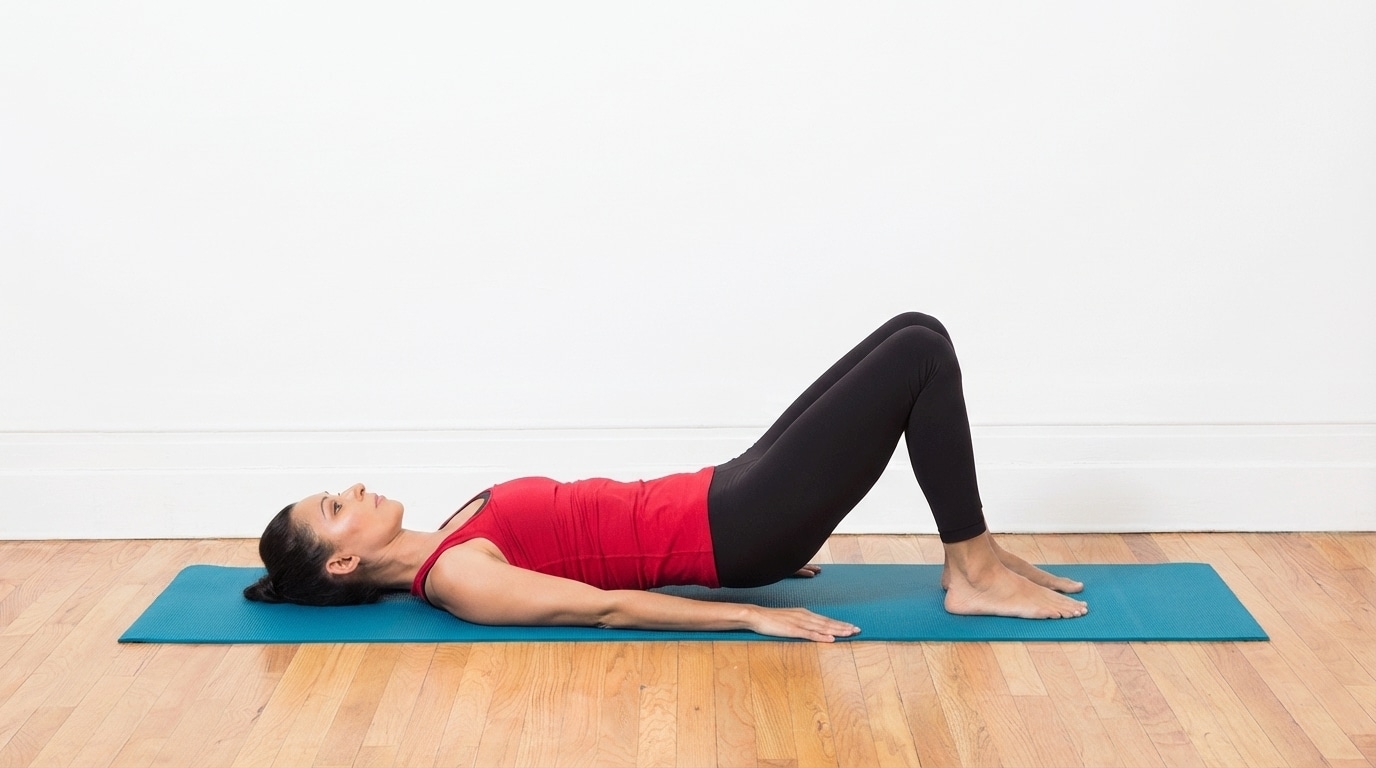
Targets: Lumbar alignment | Reps: 15 to 20
Lie on your back with knees bent. Flatten your lower back against the floor by tightening your abs, hold for 5 seconds, then release. This resets pelvic position and reduces pressure on L5-S1.
Pro Tip: Focus on using your abdominals to initiate the tilt, not your glutes. This ensures the right muscles are doing the work.
4. Dead Bug
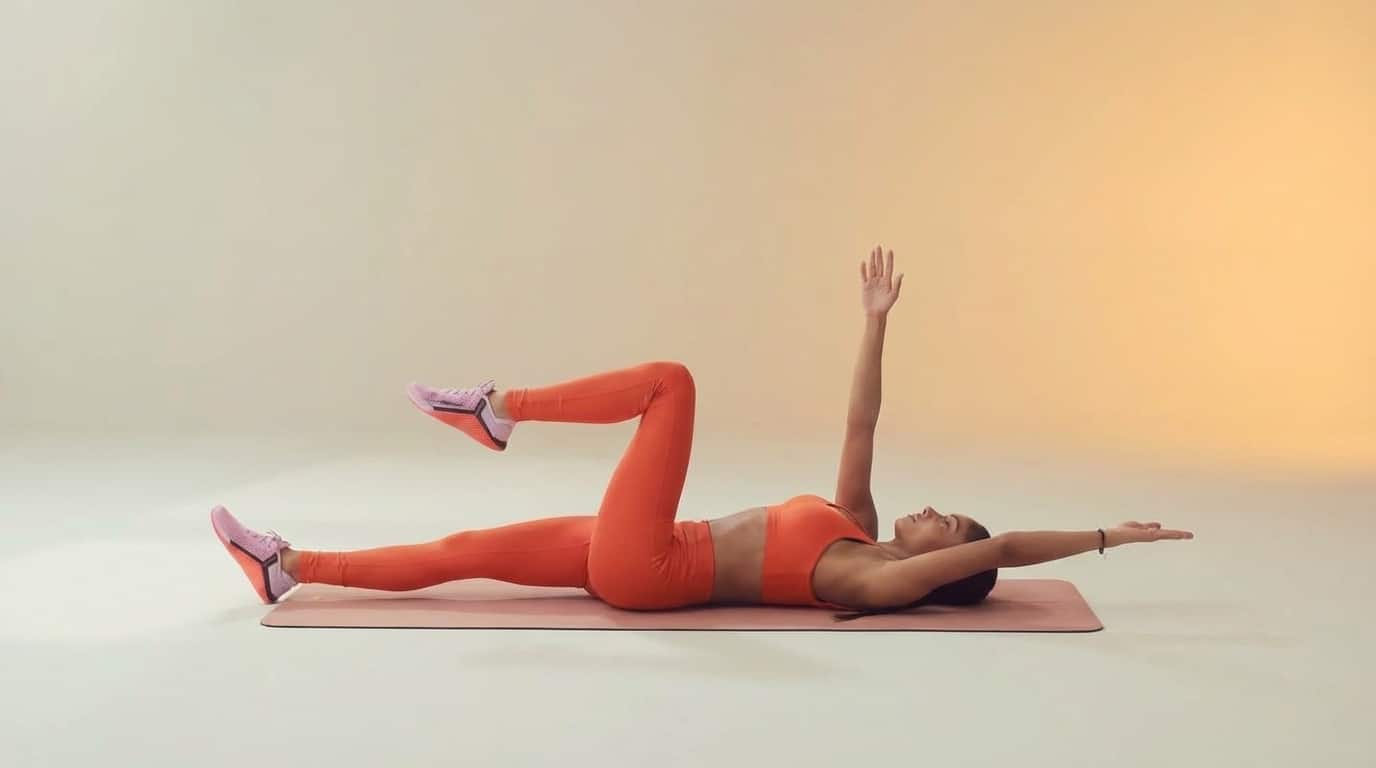
Targets: Deep core, transverse abdominis | Reps: 8 to 10 per side
Lie on your back, arms pointing to the ceiling, knees at 90 degrees. Slowly lower one arm overhead while extending the opposite leg, keeping your back flat. Return and repeat.
One of the most effective exercises for spinal stability is without loading the disc.
Pro Tip: Press your lower back firmly into the floor throughout every rep. The moment it lifts, you have gone too far.
5. Bird Dog

Targets: Multifidus, glutes, core | Reps: 10 per side
On all fours, extend your right arm and left leg simultaneously, hold for 3 seconds, then return. Alternate sides. This activates the deep stabilizing muscles that directly support L5-S1.
Pro Tip: Keep your hips level throughout the movement. Placing a water bottle on your lower back is a simple way to check for unwanted rotation.
6. Forearm Plank
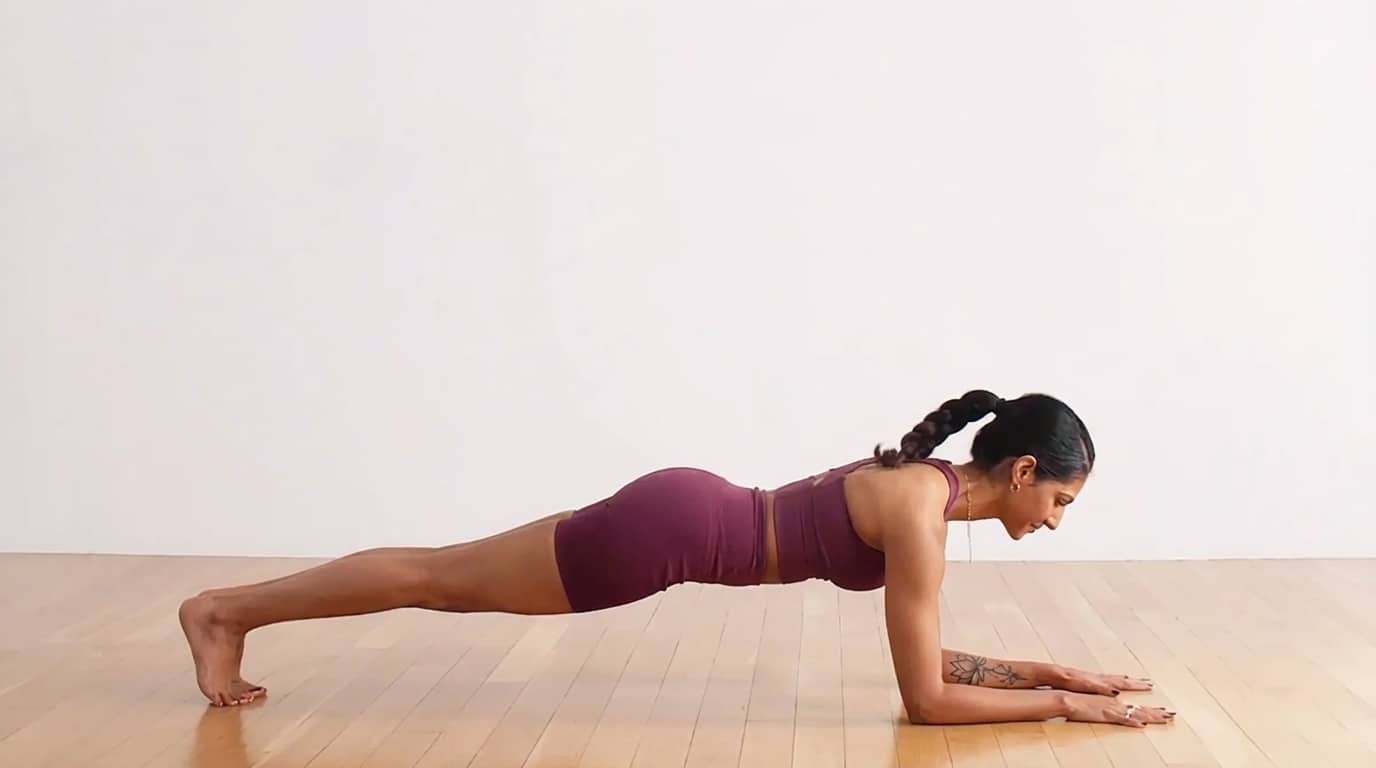
Targets: Full core endurance | Hold: 20 to 30 sec | Sets: 3
Rest on forearms and toes, keeping your body in a straight line. Avoid sagging hips. Build endurance gradually, as this helps protect the disc by training your core to maintain spinal alignment throughout daily activities.
Pro Tip: Squeeze your glutes and brace your abs at the same time. Thinking of pulling your elbows toward your toes engages the core far more effectively than just holding still.
7. Piriformis Stretch
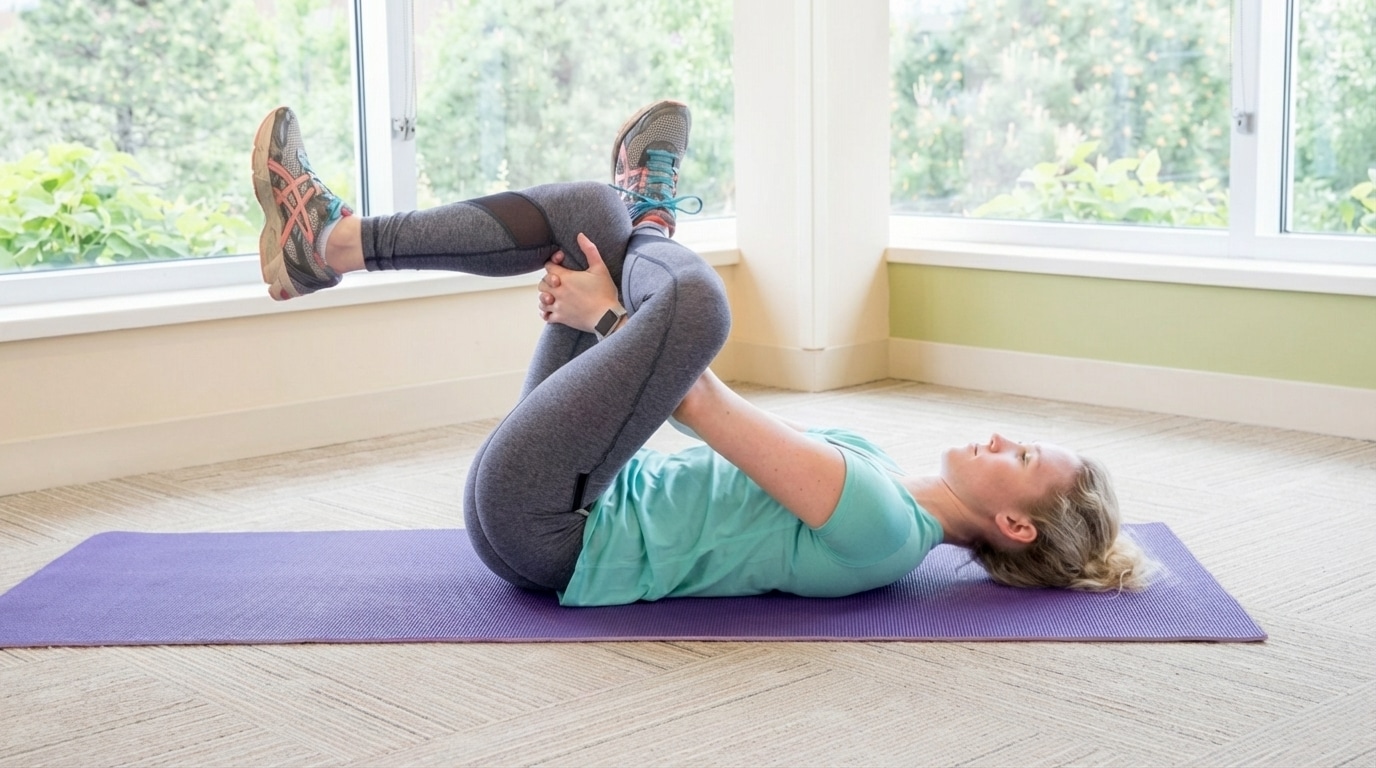
Targets: Piriformis, sciatic nerve relief | Hold: 30 sec | Sets: 3 per side
Lie on your back, cross your right ankle over your left knee. Gently pull the left thigh toward your chest. This directly relieves piriformis-related sciatic compression.
Pro Tip: Flex the foot of the crossed leg to protect your knee joint and deepen the stretch into the piriformis at the same time.
8. Hip Flexor Stretch

Targets: Psoas, anterior pelvic tilt | Hold: 30 sec | Sets: 2 per side
Kneel on one knee and shift your hips forward gently until you feel a stretch at the front of the hip. Tight hip flexors increase anterior pelvic tilt, which amplifies stress directly on the L5-S1 disc.
Pro Tip: Tuck your pelvis slightly under before leaning forward. This small adjustment prevents overworking the lower back and isolates the hip flexor far more effectively.
9. Glute Bridges

Targets: Glutes, hamstrings, posterior chain | Reps: 15 | Sets: 3
Lie on your back with your feet flat on the ground. Drive through your heels and lift your hips until your body forms a straight line from shoulders to knees. Hold 2 seconds at the top. Strong glutes significantly offload the lumbar discs.
Pro Tip: Avoid pushing through the toes. Driving through the heels shifts the load onto the glutes and away from the lumbar spine, where you need it most.
10. Clamshells

Targets: Hip abductors, gluteus medius | Reps: 15 per side | Sets: 3
Lie on your side, knees bent and stacked. Keeping feet together, rotate the top knee upward like a clamshell opening. Hip abductor weakness is a common contributor to poor L5-S1 mechanics.
Pro Tip: Keep your pelvis completely still throughout the movement. Rolling the hips backward to lift the knee higher is a common compensation that completely removes the load from the target muscle.
Exercises to Avoid with L5-S1 Pain
Eliminate these from your routine until fully recovered:
- Full sit-ups and crunches due to high disc compression
- Straight-leg toe touches, which overstretch irritated nerves
- Heavy deadlifts from excessive compressive spinal loading
- High-impact running because of jarring forces on a vulnerable disc
- Deep leg press, which creates extreme lumbar flexion under load
Skipping these moves now protects your progress later. Reintroduce them only under a physical therapist’s supervision once your pain has significantly subsided.
Sample Weekly Routine
Here is a balanced weekly plan that evenly distributes the exercises, giving your spine adequate recovery time between sessions.
| Day | Focus | Exercises |
|---|---|---|
| Monday | Mobility and Nerve Gliding | 1, 2, 3 |
| Tuesday | Core Stability | 4, 5, 6 |
| Wednesday | Active Rest | 20-min flat walk |
| Thursday | Stretching | 7, 8 |
| Friday | Strengthening | 9, 10 |
| Saturday | Light Full Routine | Mix of all |
| Sunday | Rest | Gentle walking only |
As you build tolerance, gradually increase hold times and resistance rather than adding new exercises too soon.Conclusion
L5-S1 pain does not have to be permanent. Regular, targeted exercise is among the most evidence-based non-surgical approaches to managing disc-related pain.
The ten exercises outlined here, progressing from mobility to stability to strength, address the root mechanical causes of L5-S1 dysfunction. Start slowly, respect your pain signals, and prioritize form over intensity.
With patience and consistency, most people going through disc bulge recovery experience meaningful relief within four to eight weeks.
Frequently Asked Questions
How Long Does It Take for An L5-S1 Nerve to Heal?
Most people recover from an L5-S1 disc bulge in 4 to 12 weeks.
How Should I Sit with L5-S1 Pain?
It is best to be straight and not slump. If you are prone to slumping, it can cause extra pressure on your spine.
Can L5 S1 Be Cured Completely?
With appropriate treatment and management, an L5-S1 disc bulge can be managed effectively without permanent damage.
What Irritates L5 S1?
Prolonged sitting can worsen L5 S1 problems, as it can cause back muscle tension and stress the spinal discs.
What Sleeping Position Helps L4-L5?
Sleeping on your back. This may help relax your back muscles and maintain the curve of your lower back.